milestone
My Journey
My experiences on the road of exploration
milestone
My experiences on the road of exploration
2020
Aviation Science and Technology Innovation Base
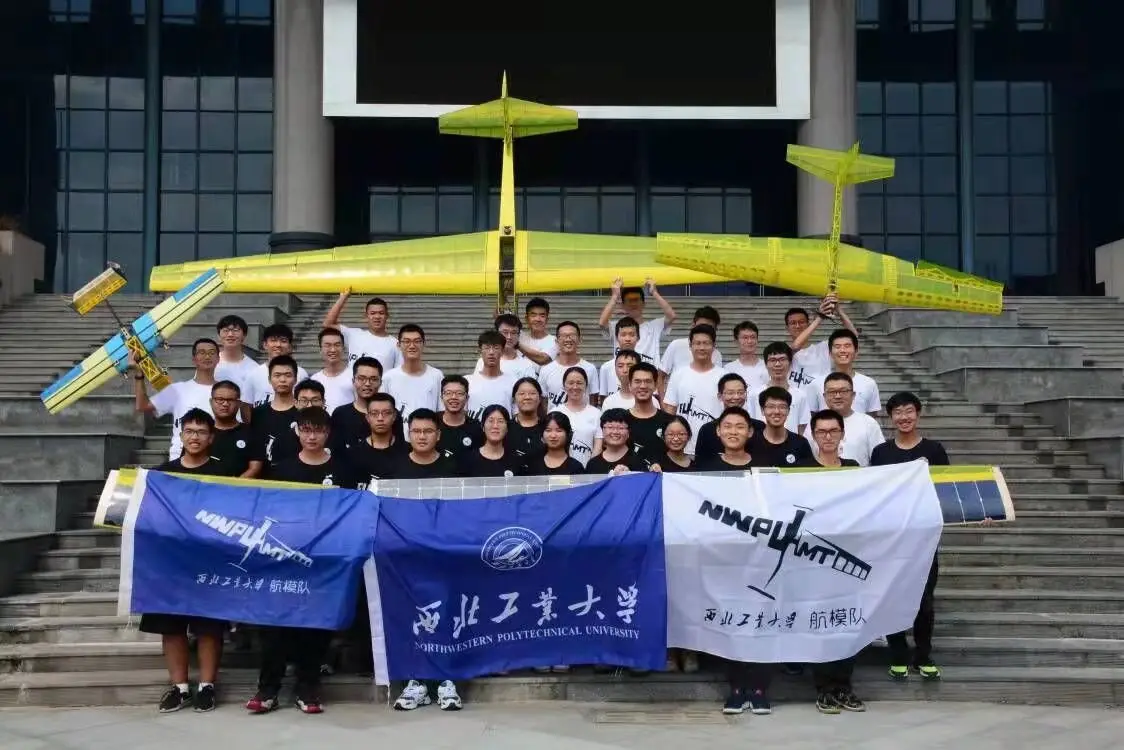
After a half-year evaluation, I was selected to join NWPU AMT, where I worked with the team to bring our self-developed unmanned aerial vehicles into flight.
2021
YOLO, STM32, Qt
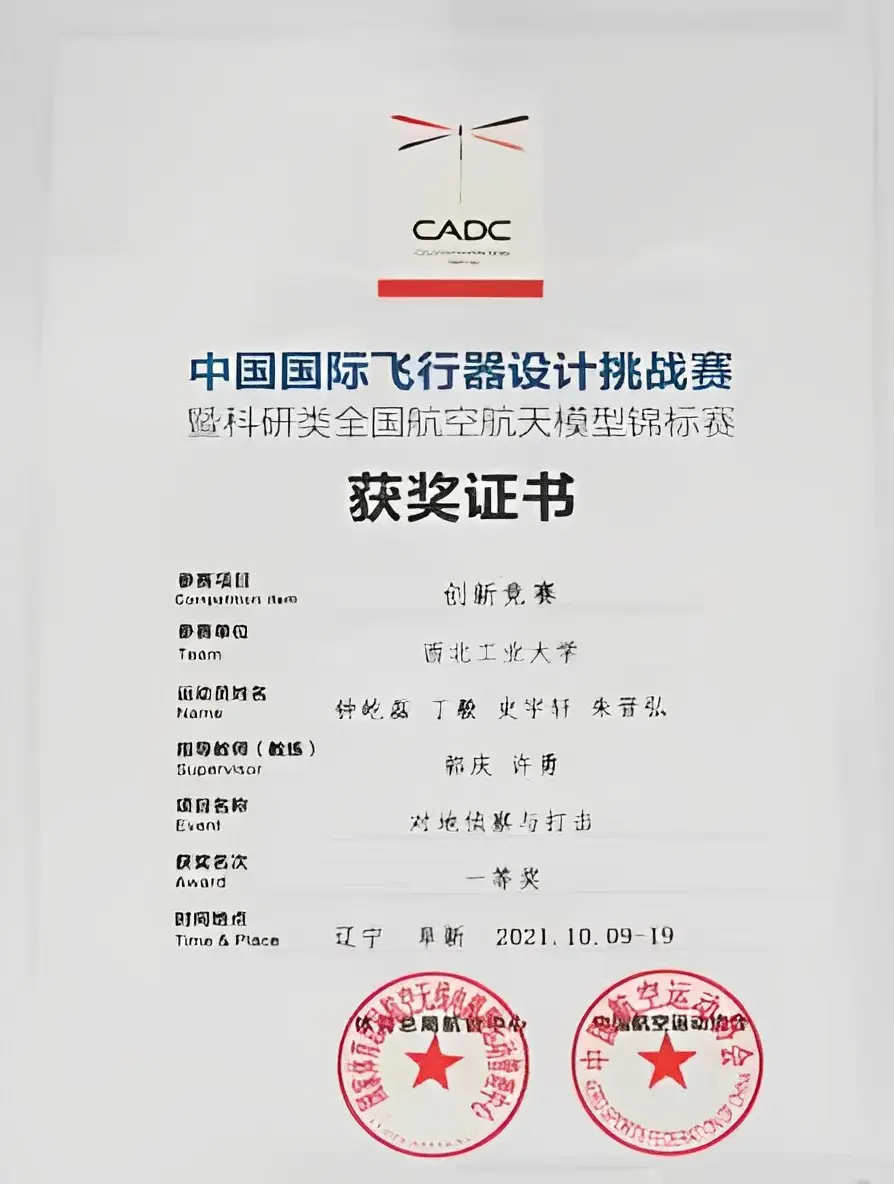
Participated in a national-level disciplinary competition for the first time and achieved 4th place among 88 finalist teams in the national finals, receiving the National First Prize.
2022
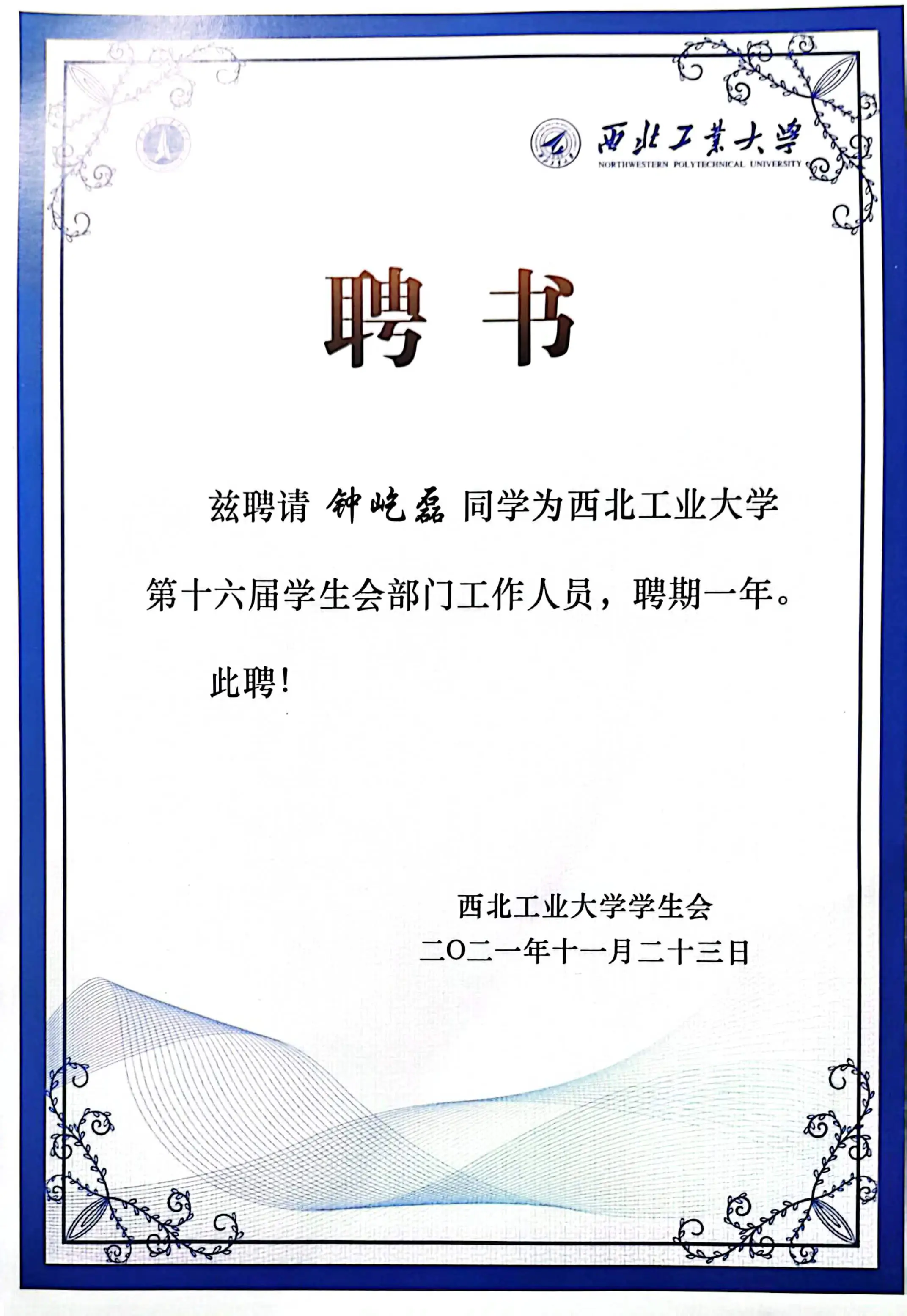
Student Union Officer
Organized academic and practice-oriented activities as a Student Union officer, gaining valuable experience in coordination and team management during a meaningful and rewarding period.
2023
Intelligent Robotics Research Center, NWPU
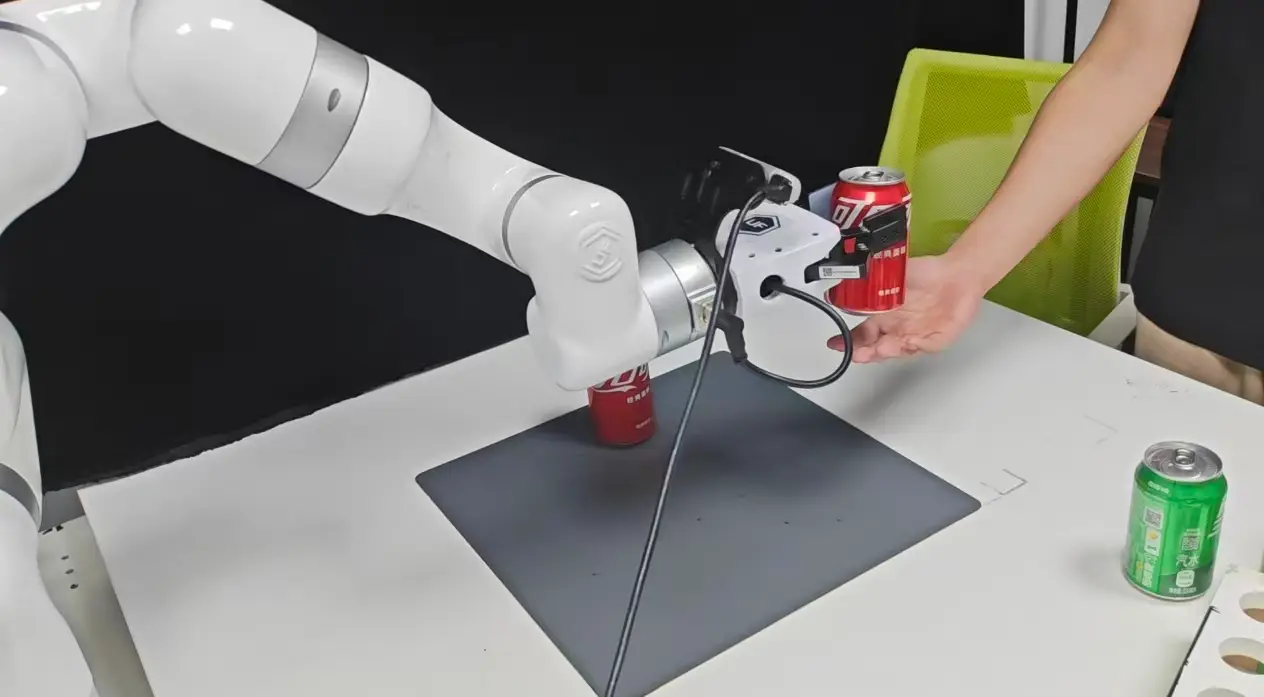
Special thanks to Prof. Ma for introducing me to Robot & 3D research and for his strong support at the beginning of my research.
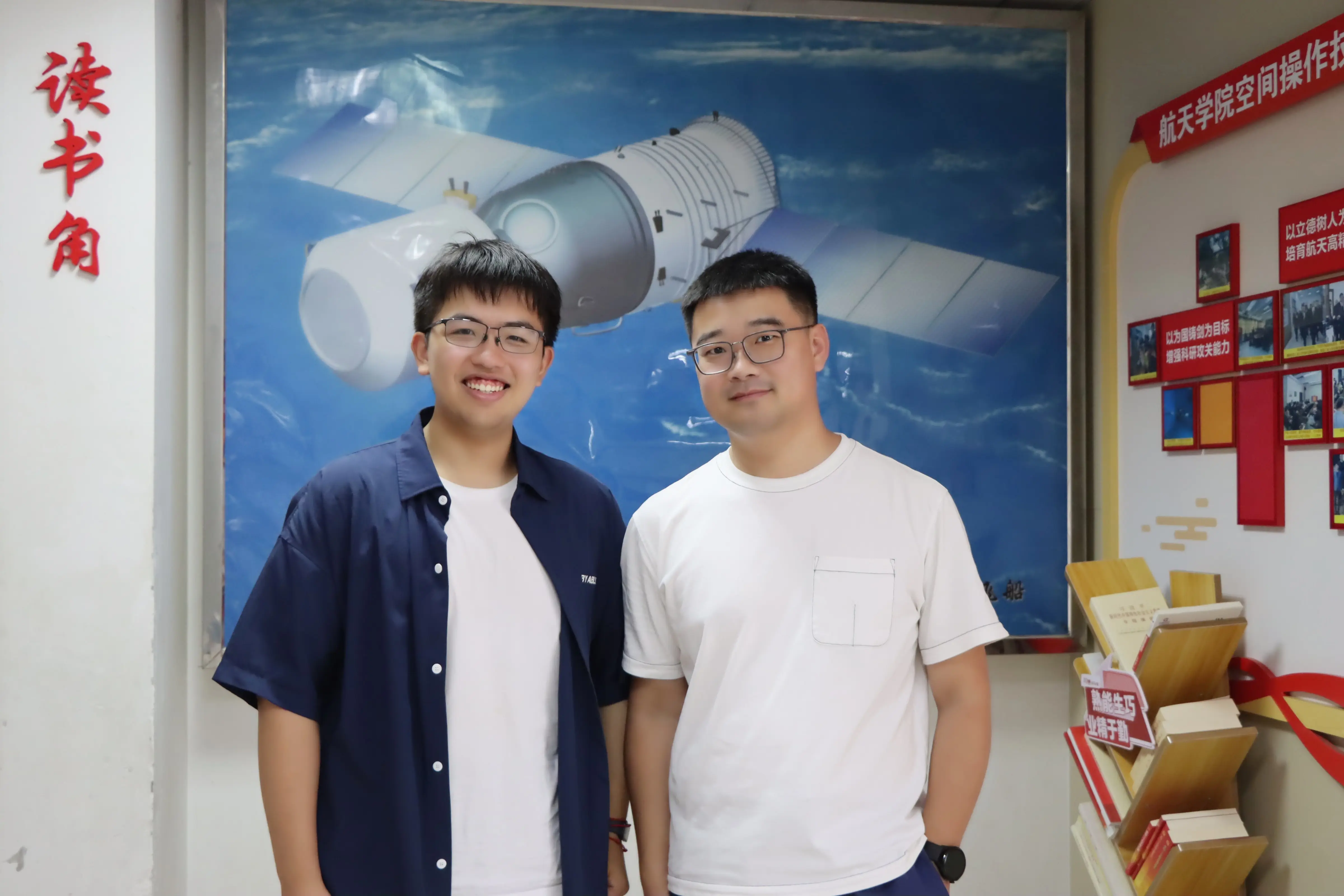
2024
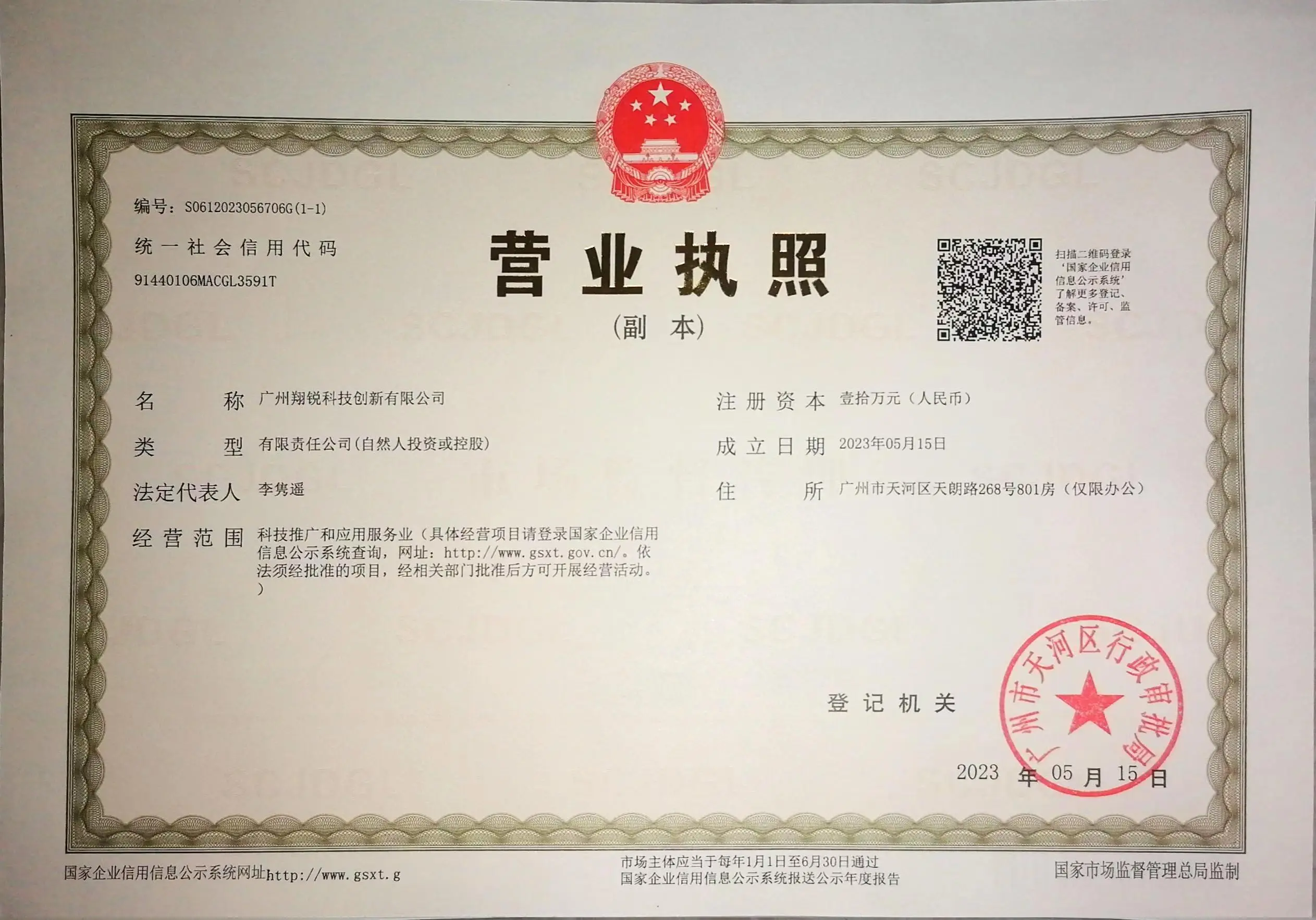
Guangzhou Xiangrui Technology Innovation Co., Ltd.
Building on my prior hands-on experience with UAVs and robotics at university, I once attempted to co-found a startup with classmates, although it ultimately did not succeed.
2024
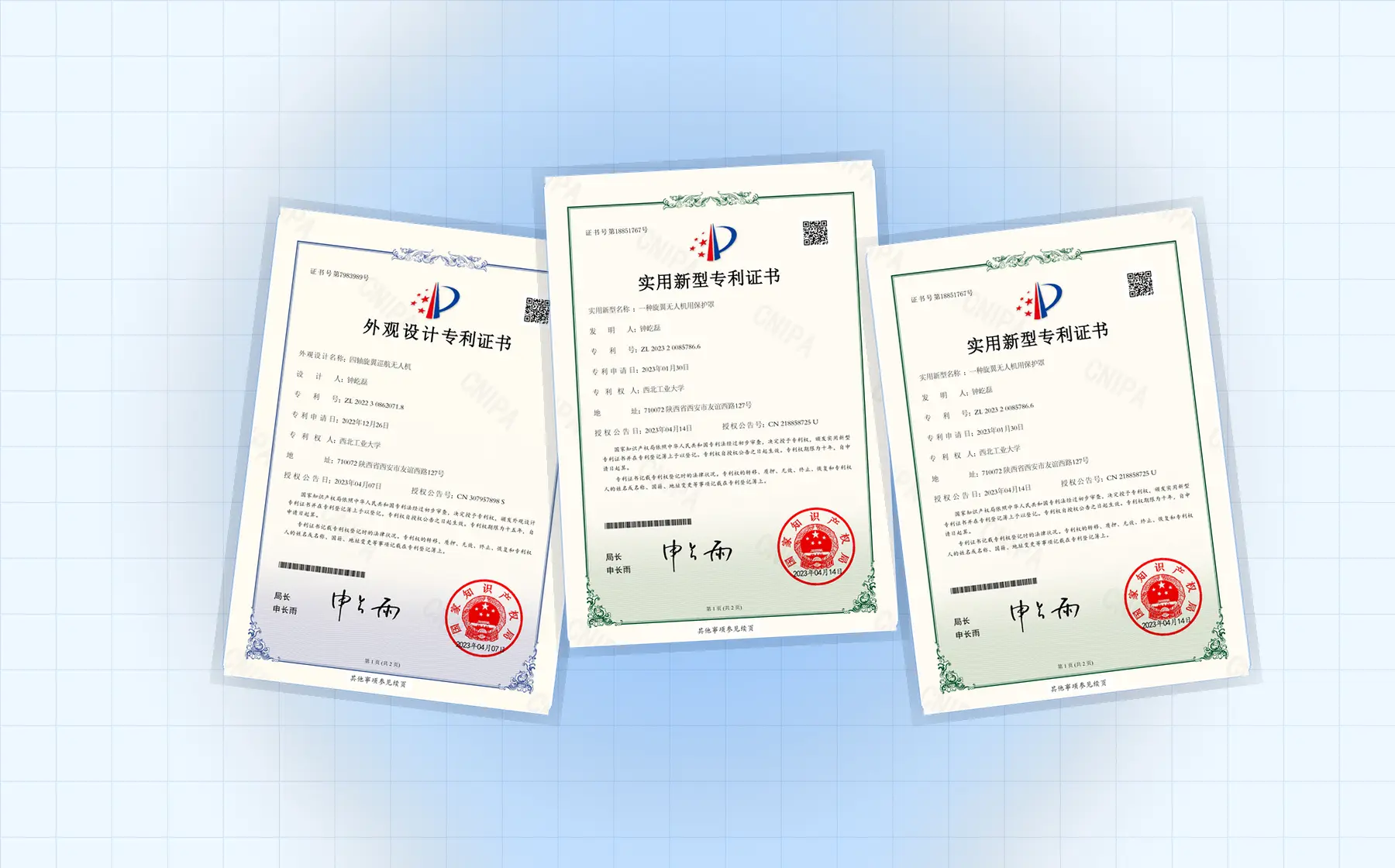
UAV Design and Utility Model Patents
My first patent filings translated UAV engineering ideas into formal intellectual-property records, covering a quad-rotor cruise UAV design and a rotor protective guard utility model.
2025
Embodied AI Research
After giving up my guaranteed admission to a graduate program in Astronautics, I am currently working as a Research Assistant at SJTU MINT Lab on Embodied Intelligence (VLA).